

Tanzania's #1 Safari Destination
Serengeti National Park Safari Tours in Tanzania

Best Time To Go
January to February and June to October (Different areas are best at different times)
High Season
July to March (The Seronera/central area is crowded)
Size
14,763km² / 5,700mi²
Altitude
1,140-2,099m / 3,740-6,886ft
Serengeti National Park Safari Tours
Serengeti Safari Tours
A Serengeti National Park Tanzania safari should be planned around your travel dates, available time and preferred level of comfort. Central Serengeti offers rewarding wildlife viewing throughout the year, while Northern, Western and Southern Serengeti become especially relevant during different stages of the Great Migration.
We are a locally owned safari company based in Arusha. We arrange private Serengeti safari tours from Arusha and Zanzibar with carefully selected accommodation, realistic travel times and enough time for meaningful game drives.

Best Serengeti Safari Tours.
Explore the best Serengeti safari tours with private, customizable itineraries, expert local guides, incredible wildlife encounters, and unforgettable Great Migration experiences.

Durée du voyage
3 jours et 2 nuits
4-Day 3 Nights Serengeti safari from Zanzibar
Durée du voyage
3 jours et 2 nuits
Durée du voyage
3 jours et 2 nuits
Durée du voyage
3 jours et 2 nuits
Durée du voyage
3 jours et 2 nuits
Durée du voyage
3 jours et 2 nuits
From $599 pp
Best for
First timers, Mid-Range, Zanzibar travelers
SERENGETI GREAT MIGRATION
Serengeti Migration Calendar:
Where to Go and When.
The Great Migration moves continuously through the Serengeti–Mara ecosystem in search of fresh grazing and water. The most suitable region for your safari therefore depends on your travel month, recent rainfall and the movement of the herds.
Use this calendar as a general planning guide rather than a guaranteed schedule. Migration timing changes from year to year, and no safari operator can guarantee the exact location of the herds or a particular wildlife event.

CALVING, NEWBORNS & PREDATORS
Southern Serengeti and Ndutu
January – March
Southern Plains & Ndutu
Between January and March, the migration is generally concentrated across the short-grass plains of Southern Serengeti and the Ndutu region.
February is commonly considered the heart of the calving season, when large numbers of wildebeest calves may be born over a relatively short period. The presence of newborn animals attracts lions, cheetahs, hyenas and other predators.
The exact location of the herds depends on rainfall and grazing conditions. Choose accommodation in or near Ndutu and the Southern Serengeti rather than travelling there daily from Central Serengeti.
KEY HIGHLIGHTS
Off-road driving permitted in Ndutu, get closer to the cats
Excellent Big Cat Sightings – Lions, Cheetahs & Leopards
Wildebeest calving
Wildlife photography


Best Time for a Serengeti Safari
The Serengeti offers rewarding wildlife viewing throughout the year. The best time to visit depends on whether you prioritise the Great Migration, general game viewing, green landscapes, fewer visitors or a particular Serengeti region.
JAN
FEB
MAR
APR
MAY
JUN
JUL
AUG
SEP
OCT
NOV
DEC
Calving Season
January to March
The Southern Serengeti and Ndutu region are normally considered for the wildebeest calving season.
The landscape is often green, and predator activity can be significant around the herds. Rainfall and the distribution of wildlife vary from year to year.
Migration North
April to June
This period brings greener scenery and changing migration movement through parts of Central and Western Serengeti.
April and May can receive heavier rainfall. Some seasonal properties may close temporarily, while other camps may offer attractive seasonal value.
Mara River Crossings
July to October
The dry season provides strong general wildlife viewing across many areas of Northern Tanzania.
Migration-focused travellers often consider Northern Serengeti during this period for the possibility of Mara River crossings.
River crossings cannot be scheduled or guaranteed.
Return South
November to December
The short rains can refresh the landscape as the migration gradually moves toward the eastern and southern areas of the ecosystem.
Conditions vary according to rainfall. Some periods may have fewer visitors, while Christmas and New Year dates can attract strong demand.
SERENGETI NATIONAL PARK REGIONS
Which Part of the Serengeti Should You Visit?
Serengeti National Park is enormous, and its different regions are not interchangeable.
Choosing a suitable region and accommodation location can be as important as choosing the safari duration. A beautiful lodge located far from your main wildlife interest may require several additional hours of driving each day.
Central Serengeti and Seronera
Central Serengeti is the most versatile choice for year-round wildlife viewing.
The Seronera area supports significant resident wildlife and is particularly known for predator sightings. Its central location also connects naturally with safari routes toward Ngorongoro, Northern Serengeti and the Western Corridor.
Central Serengeti is generally the most dependable recommendation for first-time visitors who want a broad wildlife experience rather than one particular migration event.
Year-Round Big Five & Wildlife Viewing
Great Migration Wildlife Encounters
Prime Central Serengeti Safari Location
Northern Serengeti and Kogatende
Northern Serengeti is more remote and generally quieter than the central area.
It is commonly selected between approximately July and October for the possibility of seeing the Great Migration near the Mara River. However, river crossings are unpredictable. The herds may cross several times, remain on one side of the river or move according to changing rainfall and grazing conditions.
Travellers whose main objective is possible river-crossing activity should consider at least two or three nights in Northern Serengeti.
Mara River Crossing Safaris
Great Migration in Northern Serengeti
Kogatende Game Drives & Remote Wilderness
Western Serengeti and the Grumeti Area
The Western Corridor contains open plains, woodland and riverine habitats around the Grumeti River.
This region is associated with westward migration movement during part of the year. It can be particularly interesting for travellers seeking a seasonal migration experience beyond the more heavily marketed Northern Serengeti crossings.
Access, road conditions and the operating periods of seasonal camps should be checked for your exact travel dates.
Great Migration in Western Serengeti
Nile Crocodiles & Dramatic River Crossings
Massive Wildebeest & Zebra Herds
Southern Serengeti and Ndutu
The Southern Serengeti ecosystem and Ndutu area are associated with the wildebeest calving period, generally between January and March.
Large numbers of wildebeest gather across the nutrient-rich plains when conditions are suitable. The presence of newborn animals can also attract predators.
The most appropriate accommodation depends on current herd movements, road conditions and whether the selected camp operates throughout the year or only during the migration season.
Wildebeest Calving Season Safaris
Great Migration in Ndutu
Southern Serengeti & Ndutu Game Drives
PRIVATE & GROUP SERENGETI SAFARIS
The Great Migration and
Year-Round Wildlife
The Great Migration is a continuous movement through the Serengeti–Mara ecosystem rather than a single event happening on one particular date.
Wildebeest, zebras and gazelles move in search of fresh grazing and water while predators follow the herds. Calving, movement through the Western Corridor and possible Mara River crossings are different stages of the same natural cycle.
However, the Serengeti should not be considered empty when the largest herds are in another region. Central Serengeti supports resident wildlife throughout the year, including lions, leopards, cheetahs, elephants, buffaloes, giraffes and numerous antelope species.
Good safari planning improves your probability of being in an appropriate area, but it cannot control wildlife behaviour.

This gives you greater control over:
A private safari provides an exclusive-use vehicle and professional guide for your travelling party.
Private safaris are particularly suitable for couples, families, photographers and small groups.
The price per person generally improves when vehicle costs are shared by more travellers.
-
Departure times
-
Photography
-
Lunch arrangements
-
Wildlife-viewing stops
-
The pace of each game drive
-
The amount of time spent at particular sightings
Private Serengeti Safari
Group Serengeti Safari
A group safari allows you to share the vehicle and guide with other travellers.
It can reduce the price, but everyone must follow the agreed route and daily schedule. Group safaris work best when your dates, accommodation preferences and desired itinerary match an existing departure.
We recommend a private safari when flexibility, privacy or photography is a major priority. A group departure can be suitable when budget is more important and you are comfortable sharing the experience.
SERENGETI TRAVEL DURATION
Serengeti Safari Tours by Duration
The number of days shown in an itinerary does not always represent the actual time available for wildlife viewing.
Flight times, road transfers, park entry procedures and accommodation location can substantially affect your time inside the Serengeti. A well-designed four-day safari can sometimes provide more meaningful wildlife time than a poorly routed five-day itinerary.
2-Day Serengeti Safari
A two-day Serengeti safari is best arranged as a focused fly-in experience. This option suits travellers with limited time who want the Serengeti to be their only safari destination.
The itinerary should concentrate on one Serengeti region rather than attempting to combine several distant parks.
Flight arrival and departure times will determine how much time is available for game drives.
4-Day Serengeti Safari
A four-day safari is a practical option for travellers who want to combine the Serengeti with selected Northern Circuit highlights.
A popular route includes Tarangire National Park, Serengeti National Park and the Ngorongoro Crater.
Efficient routing is essential because long transfers can otherwise reduce the time available for game drives.
3-Day Serengeti Safari
Three days can provide a worthwhile Serengeti experience when the itinerary is carefully planned.
You can choose a Serengeti-only fly-in safari with two nights in Central Serengeti or a compact itinerary combining the Serengeti and Ngorongoro Crater.
Travellers seeking a relaxed pace or a particular stage of the Great Migration may benefit from adding another night.
5-Day Serengeti Safari
A five-day safari is our strongest general recommendation for many first-time visitors.
It provides a more comfortable balance between Tarangire, Serengeti and Ngorongoro while allowing more than one meaningful game-drive period in the Serengeti.
The additional time also gives you greater flexibility when selecting accommodation and planning the pace of the journey.
6-Day Serengeti Safari
A six-day safari creates space for a more relaxed Northern Circuit itinerary. You can spend additional time in the Serengeti, reduce rushed transfers and potentially include Lake Manyara National Park or another activity depending on your interests.
This duration is well suited to couples, families and travellers who want a complete safari without moving accommodation every night.
7-Day Serengeti Safari
A seven-day safari is ideal for travellers who want deeper Serengeti exploration, a migration-focused itinerary or a more relaxed multi-park experience.
The additional time is particularly valuable for wildlife photographers, families and travellers visiting Northern Serengeti or another seasonally important region.
SERENGETI DRIVE-IN, FLY-IN & FLY-OUT
Drive-In or Fly-In Serengeti Safari
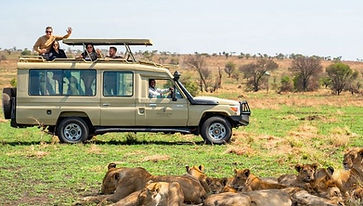
Both drive-in and fly-in Serengeti safaris can provide excellent experiences. The right format depends on your starting point, available time and the other parks you want to visit.
Drive-In Serengeti Safari
A road safari is best suited to travellers combining the Serengeti with Tarangire, Lake Manyara and Ngorongoro.
Advantages include:
-
Seeing the changing landscapes of Northern Tanzania
-
Using the same safari vehicle and guide throughout the circuit
-
Greater flexibility for multi-park itineraries
-
Better value for some private groups
The main disadvantage is the amount of time spent driving between destinations.
Fly-In Serengeti Safari
A fly-in safari is particularly valuable when the Serengeti is your main priority or your available time is limited.
Advantages include:
-
Reducing selected long road transfers
-
Flying closer to your chosen Serengeti region
-
Making short Serengeti-only itineraries more practical
-
Creating easier connections with Zanzibar
Domestic flights increase the cost and require careful coordination between flight schedules, airstrip transfers, luggage restrictions and your safari guide.
Neither option is universally better. We compare the complete journey and recommend the format that gives you the most useful safari time.
Serengeti Safari From Arusha or Zanzibar
Serengeti Safari From Arusha
Arusha is the principal operational gateway to Tanzania’s Northern Safari Circuit.
Starting in Arusha works particularly well for road-based itineraries combining Tarangire, Lake Manyara, Ngorongoro and Serengeti. It also suits travellers arriving through Kilimanjaro International Airport.
A domestic flight from Arusha to a Serengeti airstrip can also be arranged when you want to reduce driving and focus primarily on the Serengeti.

Serengeti Safari From Zanzibar

A Serengeti safari from Zanzibar is possible using domestic flights and coordinated hotel, airport and airstrip transfers.
The precise journey depends on your travel date, selected airline, flight schedule and the Serengeti region you intend to visit.
Short fly-in safaris require careful planning because departure and return times directly affect the number of hours available for game drives.
Baggage allowances, check-in times and any operational stops must be confirmed using the rules for your booked flight.
SERENGETI HOT-AIR BALLOON SAFARI
PREMIUM ADD-ON
Sunrise Balloon Flight
Safari tour packages from Zanzibar provide direct access to Serengeti, Ngorongoro Crater, Tarangire, and other national parks through professionally planned fly-in safaris.
Flight Duration
~1 Hour
Sunrise launch
The Experience
Bird's eye view
See the migration scale
Breakfast
Bush setting
+ champagne
What's Included
Pre-dawn hotel pickup
Add to any safari from
$599 per person

BUCKET LIST

Serengeti Safari
Accommodation
Serengeti accommodation ranges from public campsites and simple tented camps to permanent lodges and high-end seasonal camps.
Location should be considered before luxury level.
A well-positioned mid-range camp may provide a better safari experience than a more luxurious property requiring lengthy daily transfers.

ADVENTURE
FROM
$230
per person/day
Budget and Camping
Serengeti Safaris
Budget safaris may use public campsites, basic tented camps or simple lodges.
They are suitable for adventurous travellers who prioritise wildlife viewing and affordability over premium accommodation.
Confirm whether camping equipment, meals, park fees and transfers are included before comparing prices.

MID-RANGE
FROM
$450
per person/day
Mid-range Tented Lodge
Serengeti Safaris
Mid-range safaris normally use comfortable lodges or en-suite tented camps.
This category offers a strong balance of comfort, atmosphere and value.
Location, food quality and service levels can differ considerably between properties described as mid-range.

LUXURY
FROM
$550
per person/day
Luxury Lodges
Serengeti Safaris
Luxury camps and lodges generally provide greater privacy, personalised service, premium locations and higher levels of comfort.
Luxury should not be judged by the room alone. Guiding, camp location, exclusivity, food, transfers and the time available for wildlife viewing all contribute to the overall experience.

What Does a Serengeti
Safari Cost?
The cost of a Serengeti safari depends on:
-
Travel dates
-
Number of travellers
-
Safari duration
-
Private or shared vehicle
-
Accommodation category and location
-
Park and conservation fees
-
Domestic flights
-
Airport and hotel transfers
-
Optional activities
Two tours with the same number of days can have substantially different prices because of accommodation location, transport arrangements and included services.
Private safaris generally become better value per person when vehicle costs are shared by more travellers.
For accurate pricing, request a personalised quotation with your dates, group size, starting point, preferred duration and accommodation level.
Park fees (fixed)
Vehicle & guide
Safari Lodges
Zanzibar Hotels
Budget $230–$350 per person / day
Camping or budget lodges, road-based, Group tours
Mid-Range $450–$530 per person / day
Private semi luxury lodges, flights, vehicles & guides
Luxury $550–$900 per person / day
Premium lodges, roundtrip flights, luxury safari vehicles
What Is Normally Included?
Depending on your selected package, a Serengeti safari quotation may include:
-
Private or shared safari vehicle as specified
-
Professional safari guide
-
National park and conservation fees
-
Accommodation
-
Meals during the safari
-
Bottled drinking water
-
Airport or hotel transfers listed in the itinerary
-
Domestic flights where specifically stated
-
Applicable government taxes
Excluded
International flights
visas
travel insurance
personal purchases
Choose the Right Serengeti Safari
The best Serengeti safari is not automatically the longest or most expensive option. It is the safari that places you in the right area for your travel dates without losing too much time to unnecessary transfers.
Start by considering what matters most to you: general wildlife viewing, the Great Migration, photography, privacy, family comfort or combining the Serengeti with other national parks.
Best Serengeti Safari for First-Time Visitors
For a first safari in Northern Tanzania, we generally recommend combining Central Serengeti with the Ngorongoro Crater and, when enough time is available, Tarangire National Park.
A four- or five-day safari usually provides a better balance of travelling and wildlife viewing than attempting to cover the same destinations in three days.
If the Serengeti is your main priority, plan at least two nights inside or near the park. Three nights will provide a more comfortable pace and additional opportunities for morning and afternoon game drives.
Best Serengeti Safari for the Great Migration
The most suitable Serengeti region depends on your travel month and current wildlife conditions.
The Great Migration moves continuously through the Serengeti ecosystem in response to rainfall, water and fresh grazing. No responsible safari operator can guarantee the exact location of the herds, a particular wildlife sighting or a Mara River crossing.
We recommend the region with the strongest seasonal probability while also planning around resident wildlife, suitable accommodation and realistic transfer times.
Best Serengeti Safari for Couples and Honeymoons
A private Serengeti safari gives couples their own vehicle and professional guide. You can control the pace, spend longer at interesting sightings and choose accommodation that matches your preferred level of comfort.
Your safari can also include a carefully located tented camp, hot-air balloon safari, private meal or Zanzibar beach extension.
Best Serengeti Safari for Families
Family safaris work best with manageable driving times, suitable accommodation and flexibility around children’s needs.
Please share the ages of your children when requesting a quotation. Certain camps and safari activities may have age restrictions.
A private safari is generally the most comfortable option for families because the vehicle and daily schedule belong exclusively to your travelling party.
Best Serengeti Safari for Photographers
Wildlife photographers benefit from a private vehicle, fewer passengers, patient guiding and more time in one Serengeti region.
Tell us about your photography interests and equipment before booking. We can consider vehicle seating, luggage requirements, camp location and the importance of early-morning or late-afternoon game drives when designing the itinerary.
Serengeti Safari Reviews From Our Travellers
Trusted by 91+ Happy Travellers on TripAdvisor | Independent reviews can help you understand how previous guests experienced the organisation, guiding, accommodation and overall safari.
4.9 | Top Rated Service

Manon G
2 weeks ago
Exceptional Four-Day Safari From Zanzibar
Everything was well organised, including the domestic flights, transfers, park fees and accommodation. Our guide was knowledgeable, friendly and passionate about wildlife...

Daniel C
8 days ago
Professional Planning and Personal Support
Our experience was handled professionally from beginning to end. Salim remained in contact through WhatsApp, checked that everything was going well and clearly communicated...

1 week ago
A Memorable Family Safari
Everything was organised well from start to finish. Our guides, Sila and William, helped make the two-day safari a wonderful experience, and the lodge was another highlight for our family...
Read more

Frequently Asked Questions About Serengeti Safaris
How many days do you need in the Serengeti?
-
Two nights is a practical starting point, but three or more nights provide a more comfortable experience and additional time for game drives.
-
The right duration depends on whether you fly directly into the Serengeti or combine it with other national parks.
Is a Serengeti safari worth it?
-
Yes. The Serengeti offers extensive landscapes, strong resident wildlife, excellent predator viewing and different stages of the Great Migration.
-
The experience is most worthwhile when the itinerary includes sufficient time inside the park and avoids unnecessary transfers.
Can you guarantee the Great Migration?
-
No. The Great Migration follows rainfall, water and grazing conditions.
-
We can recommend the most appropriate region for your travel dates, but no safari operator can guarantee the exact location of the herds or a particular wildlife event.
Can you guarantee a Mara River crossing?
-
No. Mara River crossings are spontaneous natural events and cannot be scheduled.
-
The herds may gather near the river without crossing, cross at a different location or move between Tanzania and Kenya according to changing conditions.
Can I fly to the Serengeti from Zanzibar?
-
Yes. Domestic flight routes can connect Zanzibar with Serengeti airstrips.
-
The exact routing, operational stops, baggage allowance and timetable depend on your booked airline and travel date.
Is a private Serengeti safari better than a group safari?
-
A private safari is better when you want control over the pace, wildlife stops, photography and daily schedule.
-
A group safari can cost less but requires you to share the vehicle and follow a programme agreed with other travellers.
Can children visit the Serengeti?
-
Yes. Many families visit the Serengeti.
-
The itinerary should consider the children’s ages, tolerance for long drives, meal requirements, accommodation rules and activity restrictions. A private vehicle normally provides the greatest flexibility.
What should I pack for a Serengeti safari?
-
Recommended items include:
-
Neutral-coloured lightweight clothing
-
A warm layer for early mornings
-
Comfortable closed shoes
-
Hat and sun protection
-
Binoculars
-
Camera and spare batteries
-
Personal medication
-
Insect repellent
-
Soft-sided luggage for fly-in safaris
-
Always check the baggage rules of your booked airline before travelling.
Is the Serengeti safe for tourists?
-
The Serengeti is an established safari destination. Visitors should follow their guide’s instructions, remain inside the vehicle unless advised otherwise and respect all park rules.
-
Travellers should also obtain appropriate travel insurance and check the latest official health and travel advice before departure.
How far in advance should I book?
-
Booking several months in advance is advisable for July to October, the festive season and migration-focused safaris.
-
Last-minute arrangements may still be possible, but your choice of flights, camp location and room category may be limited.